



IPFS News Link • Science, Medicine and Technology
One Tick Bite Can Change Your Life
• Dr. Tenpenny's Eye on the EvidenceTicks are small, blood-feeding arachnids related to spiders and mites. Although tiny, they have become one of the most medically important vectors of infectious disease in North America and around the world. Tick populations appear to be expanding geographically, with warmer winters, increasing deer populations, suburban expansion into wooded habitats, and changing climate patterns all contributing to greater human exposure. Yet despite growing concern about Lyme disease, not all ticks are the same, not all ticks carry Lyme disease, and not all tick bites result in infection.
Different Types of Ticks
There are hundreds of tick species worldwide, but only a relatively small number commonly bite humans. In the United States, the most important include:
• American Dog Tick - Dermacentor variabilis - Common throughout much of the eastern United States and parts of the West, the American dog tick is not considered a primary carrier of Lyme disease, but it remains medically important because it can transmit several other serious infections.
The most notable is Rocky Mountain spotted fever, caused by Rickettsia rickettsii. Despite the name, this infection is actually more common in the southeastern and south-central United States than in the Rocky Mountains. Symptoms may include fever, headache, rash, muscle pain, nausea, and potentially life-threatening complications if not treated early.
• Black-legged Tick - Ixodes scapularis - Also called the deer tick, this species is primarily found in the Northeast, Upper Midwest, and increasingly parts of the South. It is the principal vector associated with the transmission of Lyme disease in the eastern United States.
• Western Blacklegged Tick - Ixodes pacificus - Found mainly along the Pacific Coast, especially in California and Oregon, this species can also transmit Lyme disease.
• Lone Star Tick - Amblyomma americanum - This aggressive tick is spreading rapidly throughout the Southeast, Midwest, and parts of the Northeast. It has become associated with several illnesses and is strongly linked to alpha-gal syndrome, an unusual allergic condition that can cause reactions to red meat.
Ticks pass through several life stages: egg, larva, nymph, and adult. Nymphs are especially important in human disease transmission because they are extremely small, often no larger than a poppy seed, and can remain attached unnoticed for long periods.
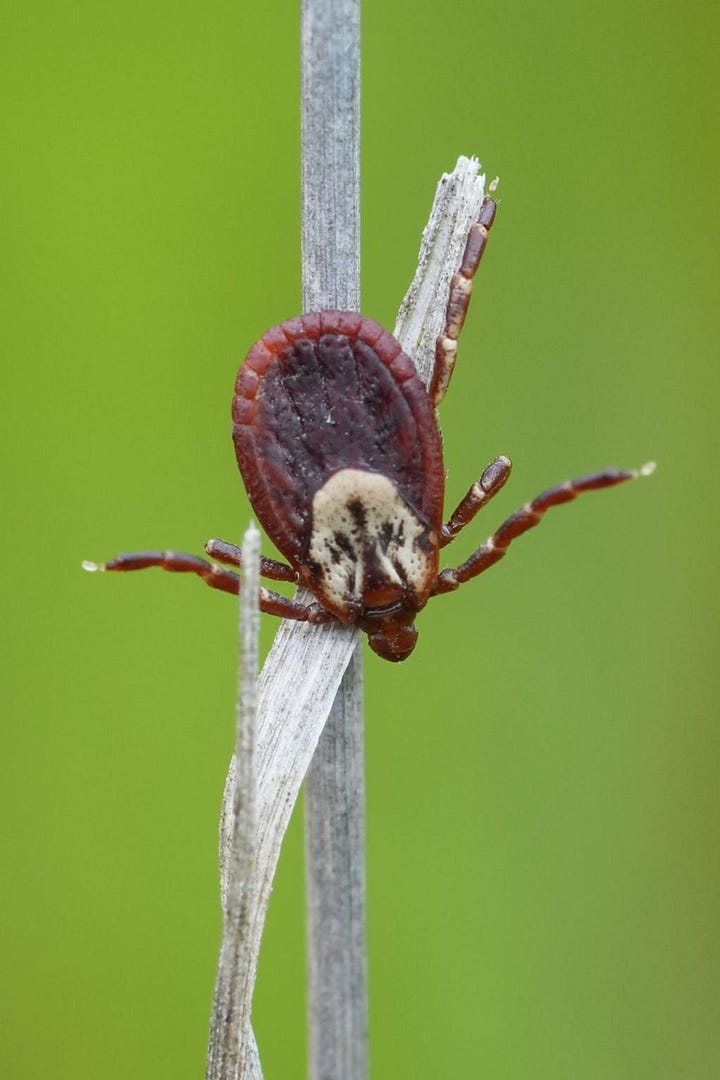
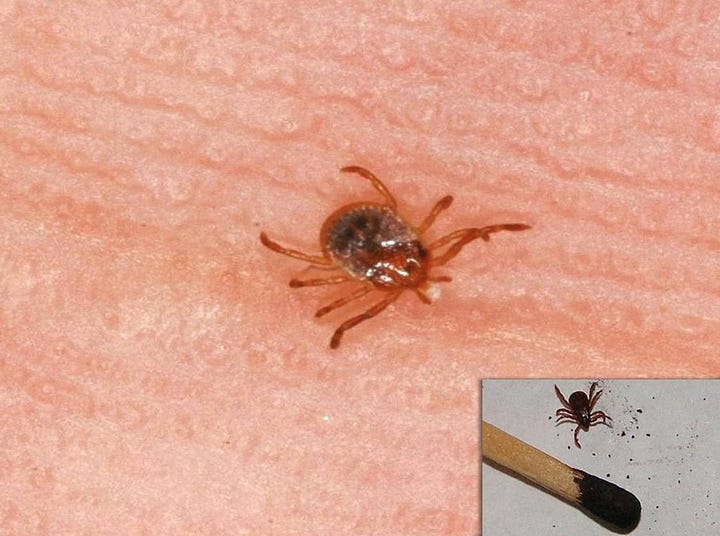
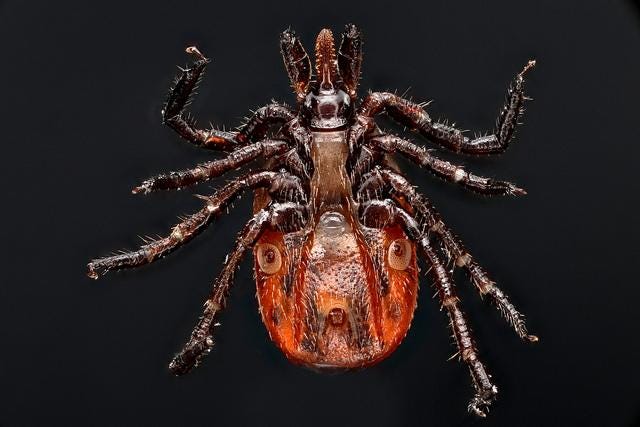
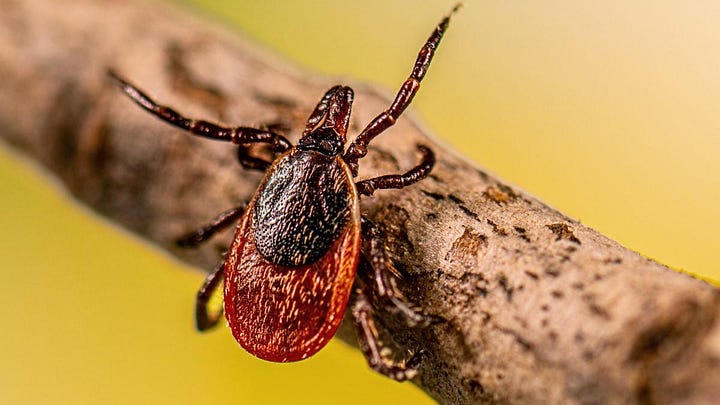
ticks in U.S.
1. Dog tick - green background
2. Black-legged tick - black background
3. Lone Star tick - red legs
4. Western black-legged tick - on the stick
Facts About Ticks
Contrary to popular belief, ticks do not jump, fly, or drop from trees. Instead, they use a behavior called "questing," where they climb onto tall grass or brush, extend their front legs, and wait for an animal or person to brush past. They can detect body heat, carbon dioxide from breath, vibrations, and even chemicals in body odor.
Ticks can survive for surprisingly long periods without feeding. Some species can live for months, even years, between blood meals by dramatically slowing their metabolism while waiting for a host. Tick saliva produces a glue-like substance that helps anchor the tick's mouthparts firmly to the skin. This allows them to remain attached during movement, scratching, and grooming while feeding. Once adhered to a mammal, a female tick may expand to nearly 100 times her original size after feeding for several days, transforming from a tiny flat speck into a swollen, bean-like organism filled with blood.


