



 The Ultimate Hunting Caliber Chart
IPFS
The Ultimate Hunting Caliber Chart: Quickly Pick the Best Cartridge for Each Species
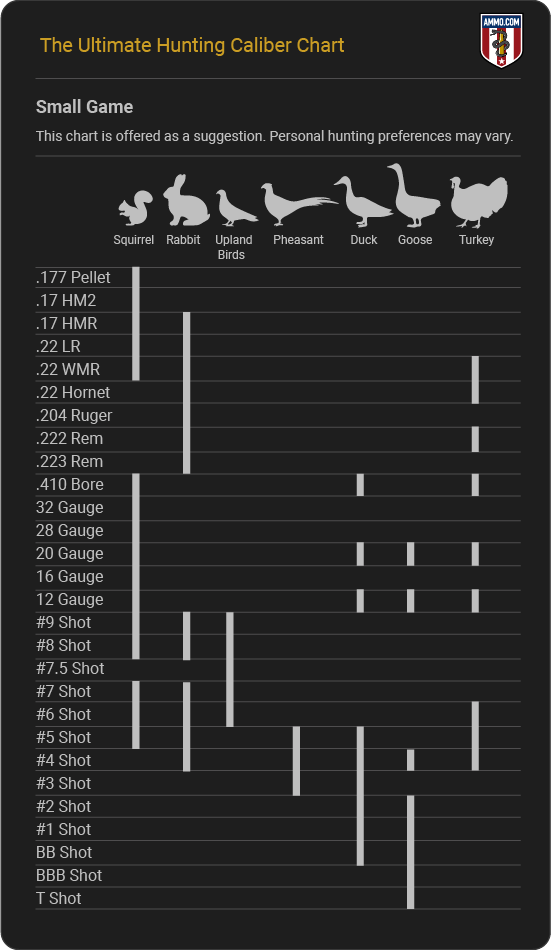
Written by Sam Jacobs Subject: Gun RightsChoosing the correct hunting caliber and cartridge will keep you legal and make you more successful during your hunts. Read on to discover which cartridges are the most popular for hunting each species. Note that you should always check your local and state hunting regulations, as some states only allow specific cartridges for hunting certain game animals.
Best Small Game Hunting Calibers
Squirrel Hunting Calibers
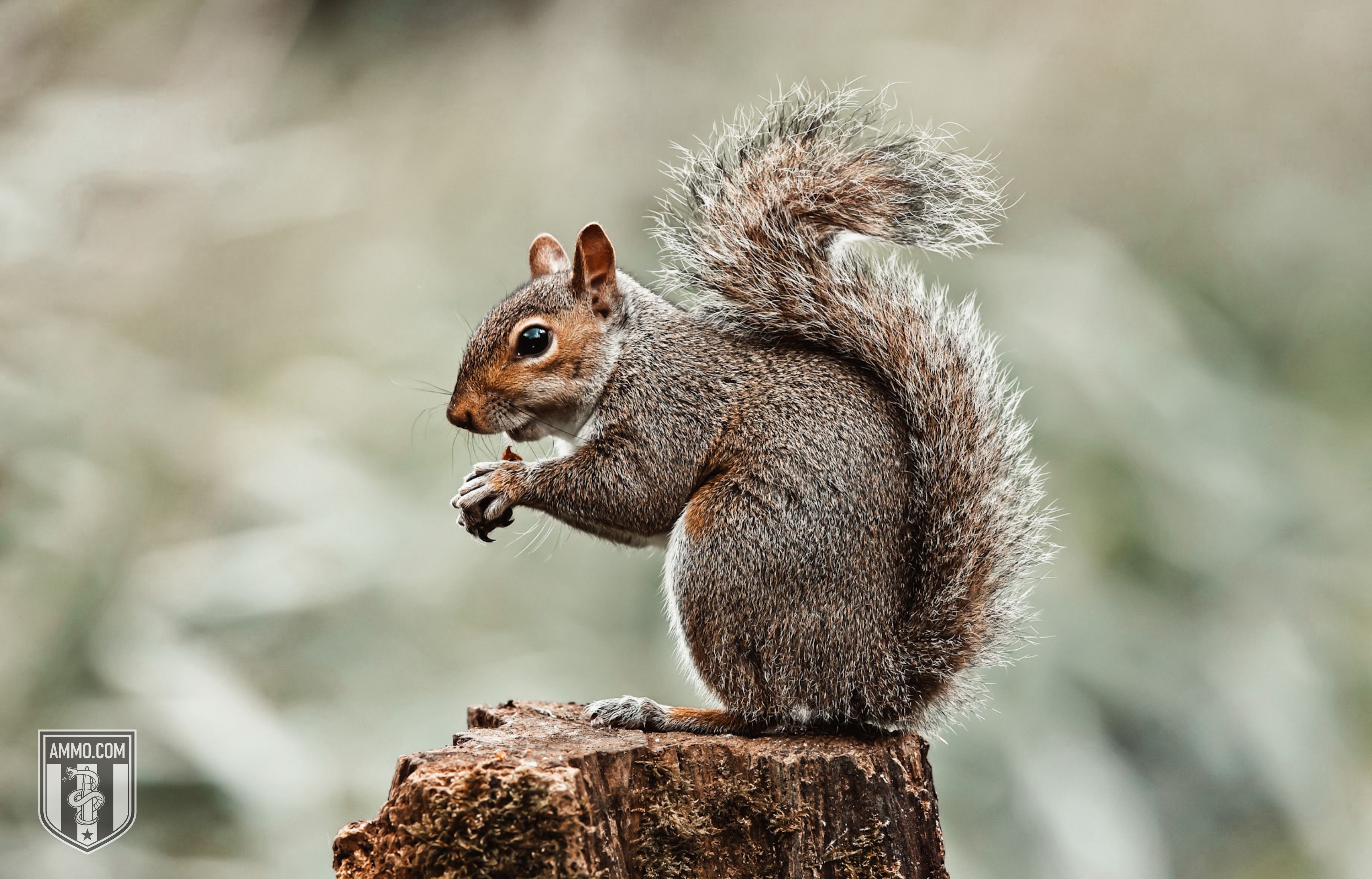
It's always best to match the size of the game to the size of the cartridge. Doing so allows you to destroy less meat and have a better hunting experience. The most popular handgun and rifle calibers for squirrels are:
• .177 Pellet
• .17 HM2
• .17 Hornady Magnum Rimfire (HMR)
• .22 Long Rifle (LR)
• .22 Winchester Magnum Rimfire (WMR)
| Caliber | Description |
| .177 Pellet | • As a kid, I ran around with a BB gun until upgrading to a .177 air rifle. Air pellets are great because they destroy less meat and are nearly silent. Take care that they are more affected by wind, and have a shorter effective range compared to other rifle cartridges. |
| .17 HM2 | • Designed for varmint hunting, the .17 Hornady Mach 2 is accurate and flat-shooting, with virtually no recoil. It ballistically outperforms the .22 LR and is often better for hunting small game in populated areas. |
| .17 HMR | • My introduction to the .17 HMR was squirrel and rabbit hunting. I was shocked at the tiny projectile's effectiveness (up to 200 yards), but it also ruined more meat than the .22LR we used. |
| .22 LR | • The .22 LR has caused more nightmares for squirrels than any other cartridge. It's my top choice for squirrel hunting because it's cheap, accurate, and effective out to about 75 yards. (.22 LR aficionados can stretch it to 100 yards.) |
| .22 WMR | • The .22 WMR has a flatter trajectory and more range than the .22 LR. It can be used on some medium-sized game, but it will damage more meat and is more expensive to fire. |
Shotguns are another fine choice for squirrel hunting. Common squirrel hunting shotgun gauges are:
•.410 Bore
• 32 Gauge
•28 Gauge
• 20 Gauge
•20 Gauge
• 12 Gauge
While the gauge is important, the shot size is the most critical consideration when hunting with shotguns. #6 shot is my go-to shot size for squirrel hunting, but #5, #7, #8, and #9 are also effective. Lead is commonly used, but many public lands require you to use non-toxic (e.g. steel, tungsten or bismuth) loads while hunting. Always check the local regulations before heading out. Common squirrel hunting shot sizes:
• #9 Shot
• #8 Shot
• #7 Shot
• #6 Shot
• #5 Shot
Rabbit Hunting Calibers
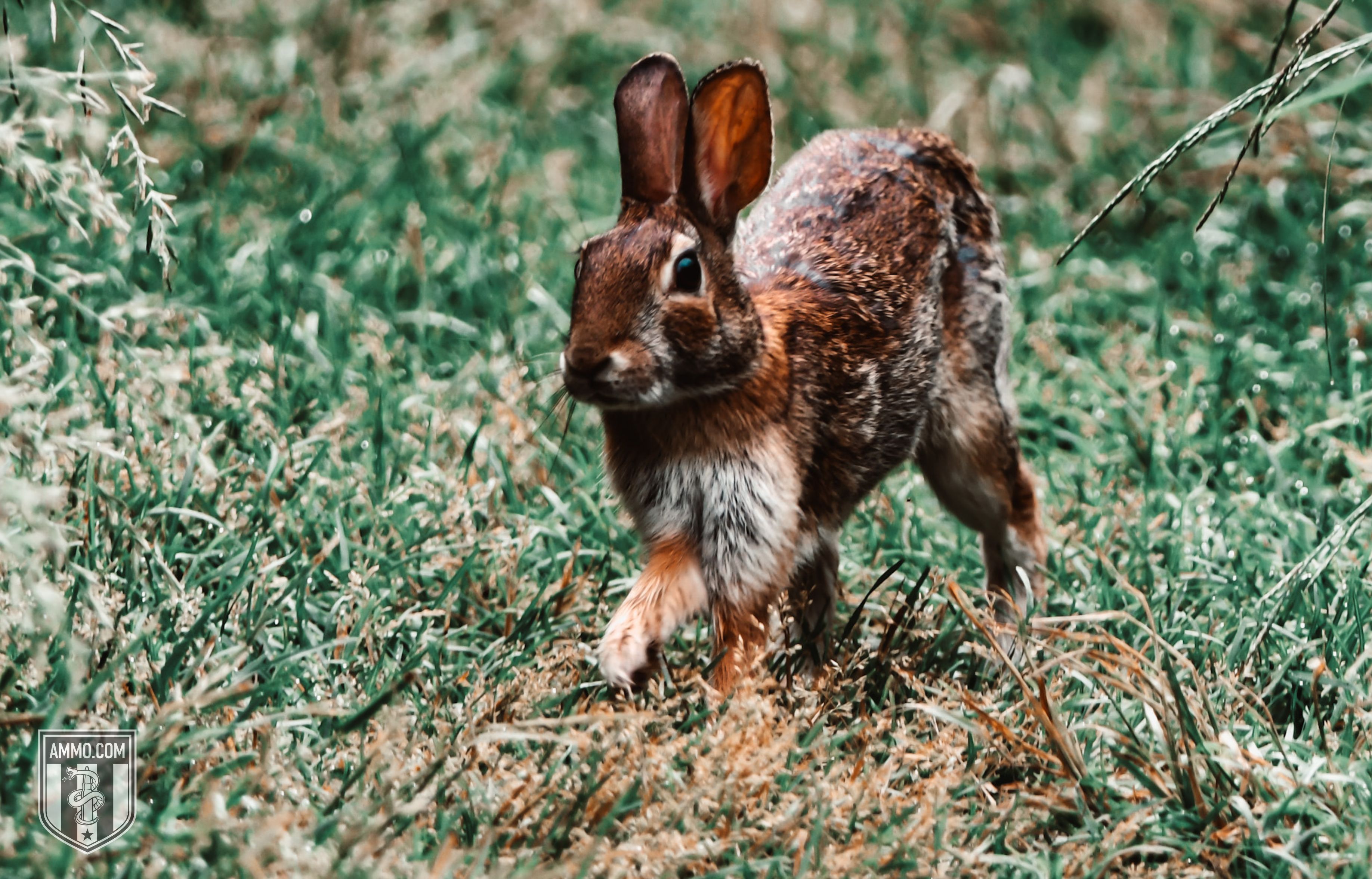
Since rabbits are still relatively small, you can often use the same calibers and cartridges for both. You can also use some slightly larger cartridges. Common rabbit hunting cartridges are:
• .17 HMR
• .22 LR
• .22 WMR
• .22 Hornet
• .204 Ruger
• .222 Remington
• .223 Remington
| Caliber | Description |
| .17 HMR | • The .17 HMR is effective out to 200 yards on rabbits and is very accurate. However, it can damage the meat of cottontail rabbits because they're smaller. |
| .22 LR | • The .22 LR has likely harvested more rabbits than all other cartridges combined in the last 100 years. However, because of the trajectory, accuracy tends to decline at 75 yards. |
| .22 WMR | • The .22 WMR is more powerful than the .22 LR, so it has a flatter trajectory (out to 100 yards). It has the same caliber bullet, but it's also more expensive. |
| .22 Hornet | • The .22 Hornet fires a high-velocity 35 to 45 grain bullet. It has largely fallen out of favor during recent decades, and will be very difficult to find for sale. |
| .204 Ruger | • The .204 Ruger is an incredibly high-velocity, flat-shooting round. It is best for long-range shots (150-400 yards). It's also much more expensive than .22 LR, so if you plan to shoot a lot, this probably isn't the cartridge for you. |
| .222 Remington | • The .222 Rem is another flat-shooting, high-velocity cartridge – perfect for long-distance shots, but certain to damage more meat and cost more than .22 LR. |
| .223 Remington | • The .223 Rem offers lightweight bullets at high velocities, but it's sure to damage lots of meat on cottontail rabbits. It's best reserved for jackrabbits and long shots. |
When hunting rabbits within 50 yards, I often opt for a shotgun. The gauge will affect your range, recoil, and pattern density, but I grew up using a .410 Bore and 20 gauge and currently use a 12 gauge. Shot size that should be your primary concern. The best shot sizes for rabbit hunting are:
• #9 Shot
• #8 Shot
• #7 Shot
• #6 Shot
• #5 Shot
• #4 Shot
Dove, Quail and Upland Hunting Loads
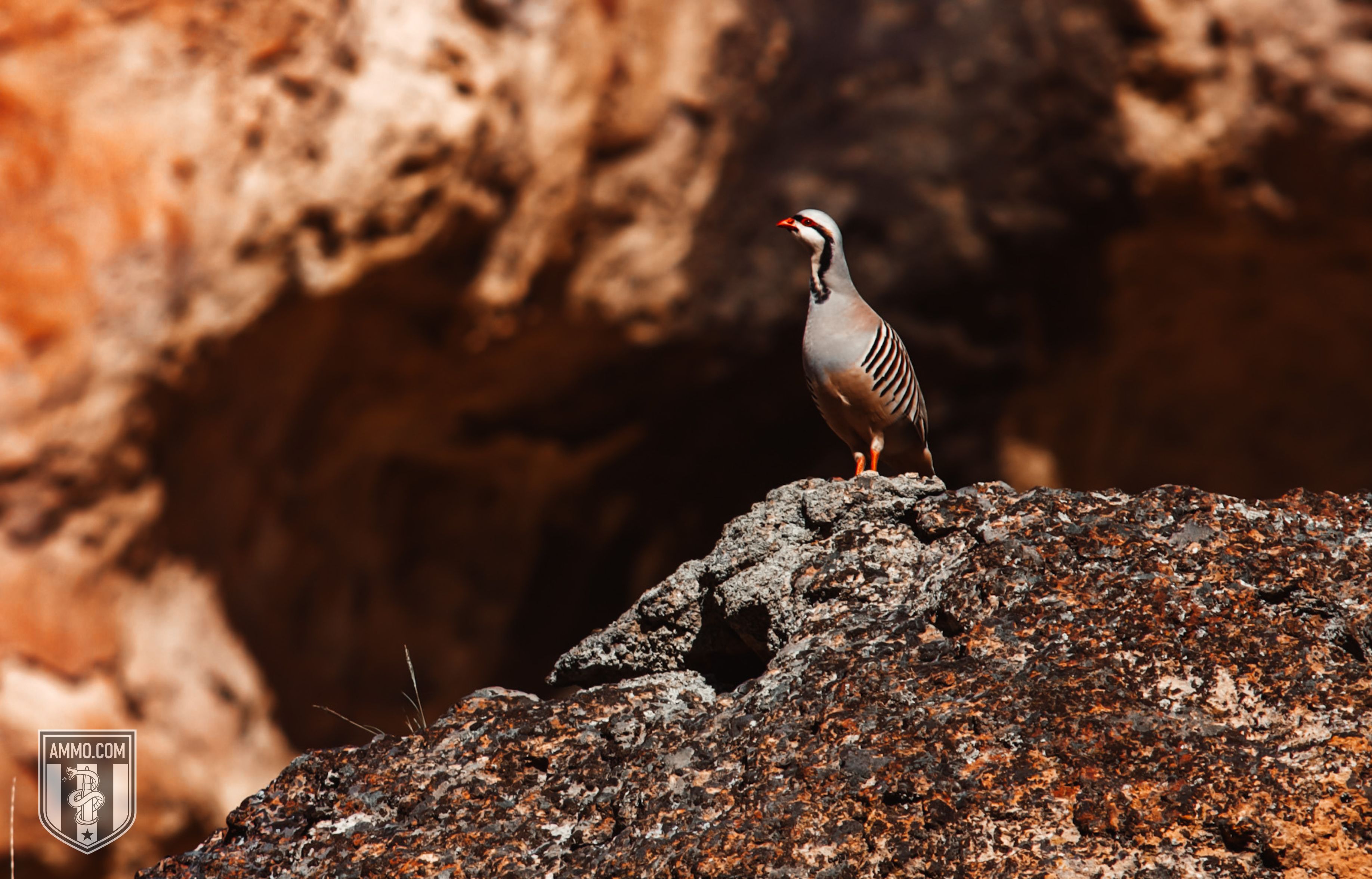
In most cases, you must use a shotgun when wingshooting (turkey is the lone exception). Small game birds like dove and quail require smaller shot sizes to avoid damaging too much delicate meat. I typically use the following shot sizes when dove, quail, and upland bird hunting:
• #9 Shot
• #8 Shot
• #7.5 Shot
• #6 Shot
• #5 Shot
• #4 Shot
| #6 Shot | • #6 shot is often the largest shot size I use for dove hunting (unless I'm desperately low on shotgun shells). |
| #7 Shot | • #7 shot is an excellent choice. It's not so large that it will destroy the meat, but it is large enough to drop a hard-to-hit bird. |
| #8 Shot | • I also like the #8 shot. If you find yourself struggling to hit birds with a shotshell loaded with #7 shot, try switching to a #8 or #9 shot (or changing your shotgun choke). |
| #9 Shot | • I don't use much #9 shot, as the tiny pellets don't retain as much energy downrange as the larger pellets do. If you plan on close shots, then #9 is a suitable option. |
The Smaller shot size has more pellets in the shotshell than a larger shot size. A #9 shot pellet is smaller than a #6 shot pellet. The same can be said for increasing the gauge: a 12 gauge shotshell will have more pellets per shotshell than a 20 gauge shotshell of the same shot size and length.
Pheasant Hunting Loads
When hunting pheasants and other large upland game birds, you might need to step up to #4 shot – but other sizes will work. The most common shot sizes used for pheasant hunting are:
• #5 Shot
• #4 Shot
• #3 Shot
| #3 Shot | • If you know the area you're hunting tends to have skittish birds, you might want to step up to #3 shot. The larger pellets will carry more energy downrange. |
| #4 Shot | • #4 is the go-to shot size for many pheasant hunters and should be one of your top choices for these birds. |
| #5 Shot | • While you could use a smaller shot than #5 to hunt pheasants successfully, I don't recommend it unless you're struggling to hit a bird and need a few extra pellets from downsizing. |
Duck Hunting Loads
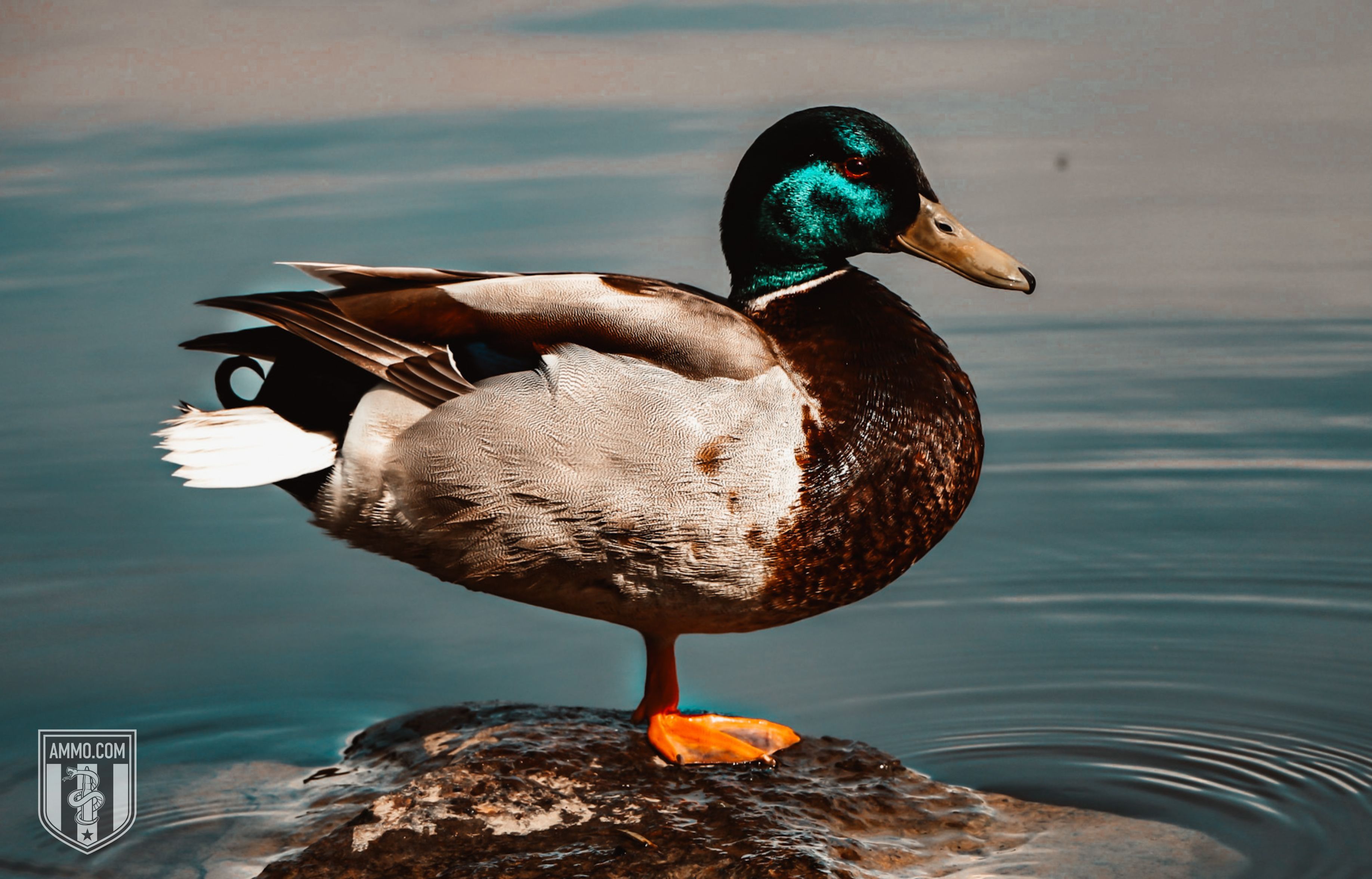
Waterfowl are a little tougher than upland birds due to their increased size and down feathers, so using a 20 gauge or 12 gauge is often best. However, a .410 will get the job done if you're up for a challenge. You'll also have to use nontoxic loads like steel, bismuth, or tungsten. For smaller ducks, such as teal, #4 shot will be plenty. For larger ducks, like mallards, I like to use #2. Those aren't the only options you have for ducks either. Here are several more:
• #5 Shot
• #4 Shot
• #3 Shot
• #2 Shot
• #1 Shot
• BB Shot
| #5 Shot | • When hunting small divers and teal, #5 shot will keep you from destroying meat – but it will mean you'll need follow-up shots on larger ducks. |
| #4 Shot | • #4 shot is an excellent all-around size for waterfowl. It's my go-to as it has plenty of stopping power but doesn't destroy smaller ducks. |
| #3 Shot | • I have never hunted duck with #3 shot, as I primarily use #4 or #2, but I don't see any reason why it wouldn't work if you can find it. |
| #2 Shot | • #2 shot is my other favorite for duck hunting, but it can be a bit much for smaller ducks (especially at close range). |
| #1 Shot | • #1 is another shot size that I haven't hunted with because it's an in-between size, but I see no reason why it wouldn't work. I'll use #2 or BB when hunting big ducks and small geese. |
| BB Shot | • BB is generally considered a goose shot size, but I've also found it beneficial for large ducks (especially in late winter when their down is thickest). |
Goose Hunting Loads
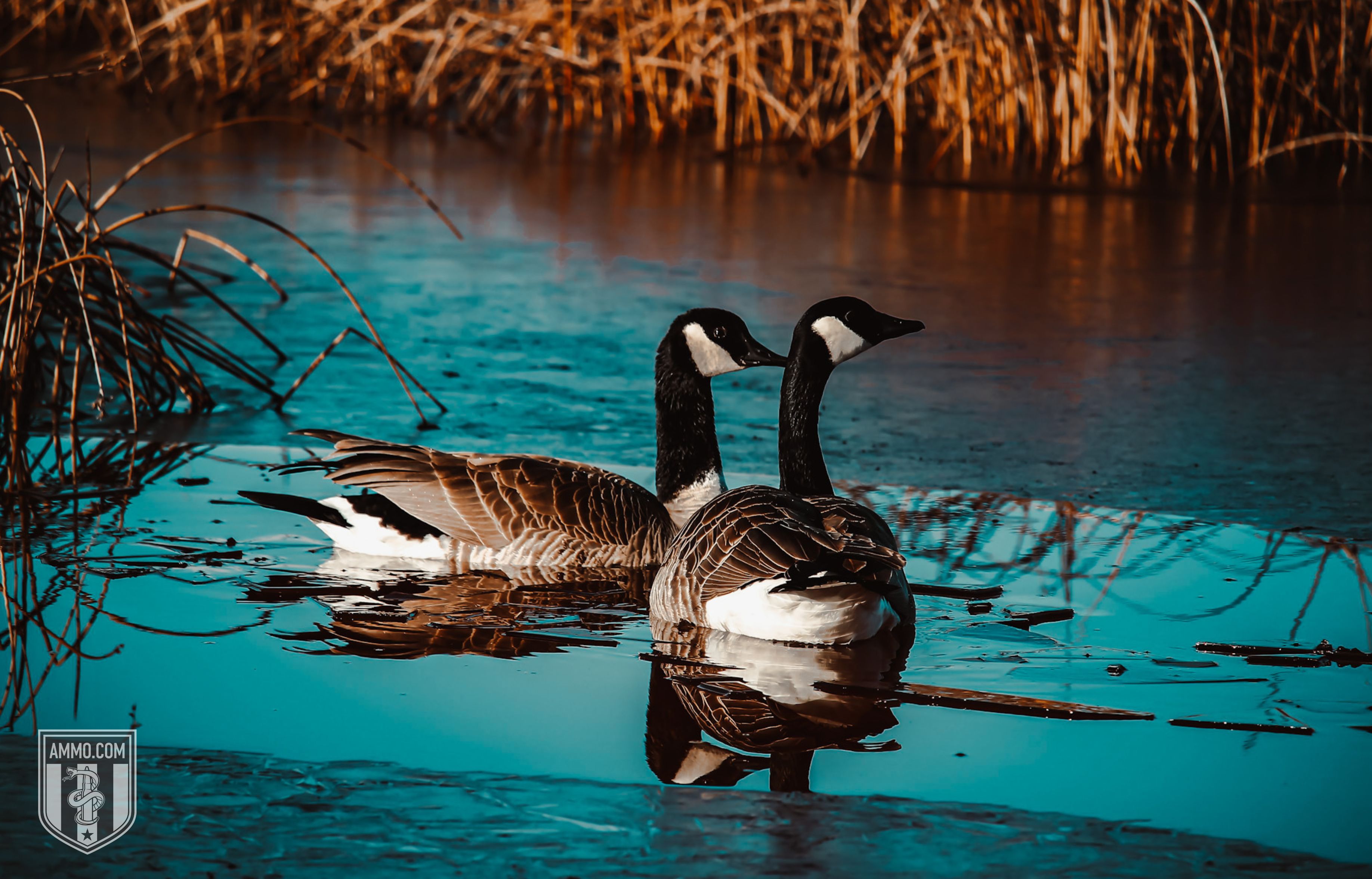
Your shot size for goose hunting will be determined by the size of the geese you're hunting. Local Canada geese in my neck of the woods require at least #2, but I prefer BB and larger because they're giant. Migraters like snow geese are smaller, so they are easier to take using smaller pellets like #4 because they're about the size of big mallards. Here are the best goose hunting shot sizes for 20 gauge and 12 gauge:
• #4 Shot
• #2 Shot
• BB Shot
• BBB Shot
• T Shot
| #4 | • The smallest pellet size I use for geese is #4, and that's often a last resort for smaller geese. |
| #2 | • #2 is a solid all-around choice as it has plenty of stopping power for bigger geese, but it is not overpowering for smaller geese. |
| BB | • BB is my go-to for goose hunting because I hunt a lot of massive local geese and I need that extra knockdown power. |
| BBB | • BBB is a shot size I use sparingly. It's overkill for smaller geese, but sometimes necessary for the large locals. |
| T | • T shot should be saved for Sandhill crane and swan hunting, but I had a buddy who used them for the giant local geese. I'm not sure he hit anything, despite his shoulder being sore after the hunt from shooting a lot. |
Turkey Hunting Cartridges & Loads
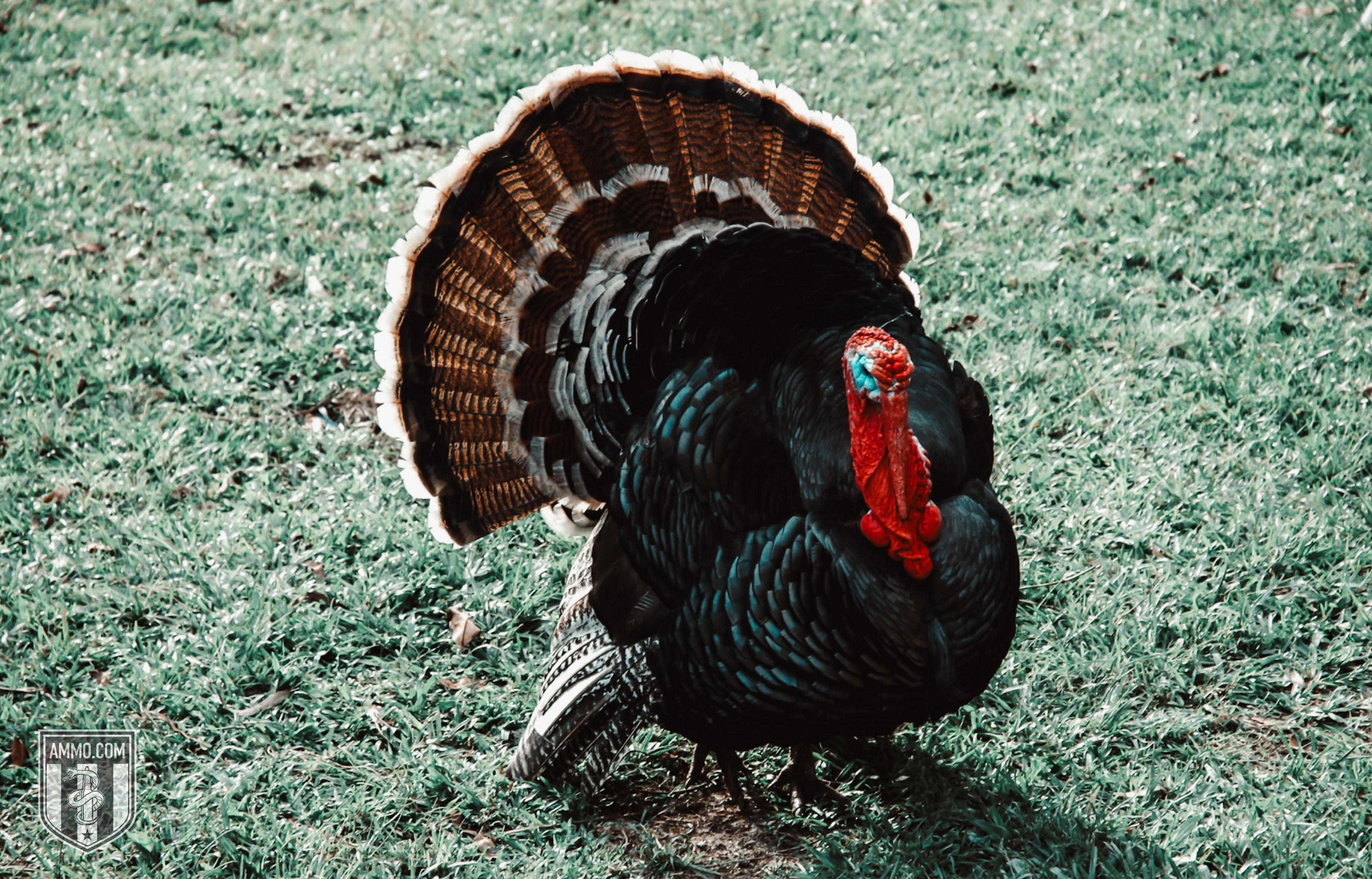
Some states allow turkey hunters to use rifles, but most folks still prefer shotguns. .410 bore shotguns have exploded in popularity among turkey hunters, but the trusty 12 and 20 gauge shotguns are still a primary choice for many. Most turkey loads are #4 and #5 shot, but #6 shot also works. You might also stumble across turkey loads that combine multiple shot sizes.
| #4 | • #4 is often the largest shot size you'll see in turkey loads, as larger pellets will damage too much meat. |
| #5 | • #5 shot is always a safe bet because it's a happy medium. You still get lots of pellets with plenty of knockdown power. |
| #6 | • When hunting at closer ranges or smaller turkeys, #6 shot is plenty capable of harvesting a turkey. |
Some rifle cartridges can also be used for turkey hunting, such as:
• .22 WMR
• .22 Hornet
• .223 Rem
| .22 WMR | • The .22 WMR is the ideal rifle cartridge for turkey hunting within 75 yards, as it won't damage too much meat but still has plenty of knockdown power. |
| .22 Hornet | • The .22 Hornet is the best option for longer ranges (up to 200 yards), but it can be too powerful and damage too much meat at close ranges. |
| .223 Rem | • Some recommend the .223 Rem with a 35 grain bullet, but even that can be too overpowering for a turkey. I only recommend using the .223 for long shots. Definitely don't use a larger caliber. |
Best Medium Game Hunting Calibers
Fox & Coyote Hunting Calibers
Varmints like foxes and coyotes tend to have thin skin compared to game animals like deer. They're also prized for their furs, which means using large-caliber bullets is less than ideal. While most medium-sized game can be taken with buckshot at close range, a rifle is often preferred.
• .17 Hornet
• .17 HMR
• .22 WMR
• .204 Ruger
• .223 Rem
• .22-250 Rem
• .220 Swift
• .243 Win
• 6mm Creedmoor
| .17 Hornet | • The .17 Hornet is an excellent cartridge for shots within 200 yards that causes minimum damage to the pelt. |
| .17 HMR | • The .17 HMR is less than ideal for anything over 50 yards. If you enjoy calling predators in close, this is the cartridge for you. |
| .22 WMR | • Another close-range option. The .22 WMR is most suitable for taking game within 100 yards. |
| .204 Ruger | • The .204 Ruger is a high-velocity round that can ethically kill a coyote or fox at 400 yards. If you enjoy long-range hunting, this is the cartridge for you. |
| .223 Rem | • If you're less worried about damaging the pelt and want to increase your range, you can always step up to a .223 Rem or larger caliber. You can ethically harvest coyotes and foxes out to 500 yards with a .223 Rem. |
| .22-250 Rem | • Another long-range option is the .22-250 Rem. This cartridge is a coyote's nightmare, flat shooting out to 200 yards and typically dropping about 4 inches by 300 yards. |
| .220 Swift | • The aptly named .220 Swift is a high-velocity flat-shooting round. It's very accurate to well over 500 yards and still carries plenty of energy downrange. |
| .243 Win | • The .243 is most often thought of as a big game cartridge, and rightfully so: It will damage a pelt, even at a long distance. Don't use it if you care about the condition of your trophy. |
| 6mm Creedmoor | • The 6mm Creedmoor is another predator management cartridge that should not be used for fur harvesting. It carries plenty of energy to take coyotes and foxes beyond a quarter of a mile. |
Coyotes and foxes can also be taken with a .410 bore, 20 gauge, or 12 gauge shotgun at close range. The best shot sizes for this are:
• #4 buckshot
• #1-4 buckshot mix
• #3
• #2
• #1 buckshot
• 0 Buckshot
• 00 buckshot
Antelope Hunting Calibers
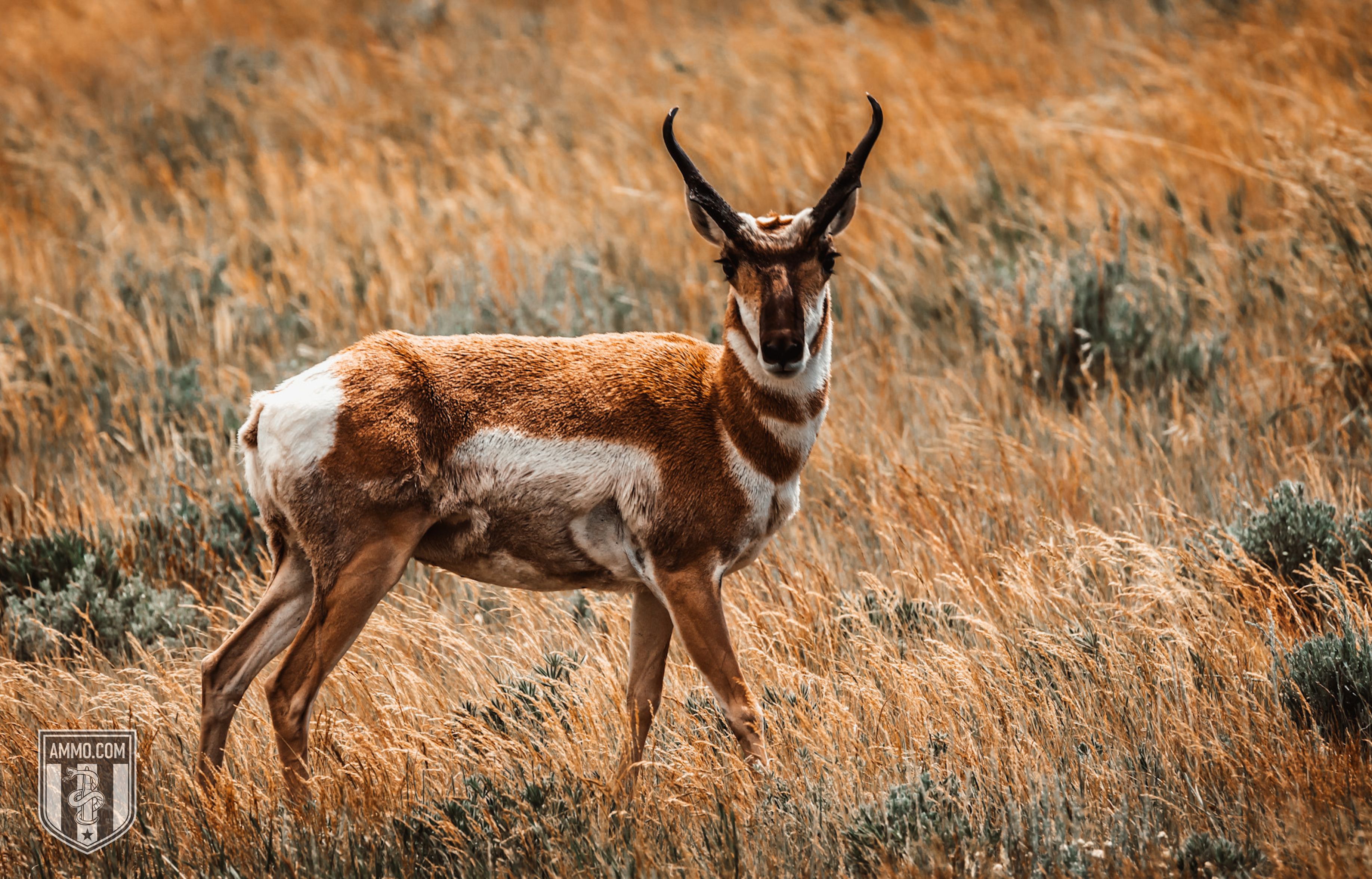
Antelope and pronghorn are fast and wary animals. While you might get a close shot because of their environment, you will likely have to cover a distance of 300+ yards. These distances call for a flat-shooting, high-velocity cartridge. The calibers most often used for Pronghorn hunting are:
• .22-250 Rem
• .243 Win
• 6.5mm Creedmoor
• .257 Weatherby (WBY)
• .270 Win
| .22-250 Rem | • As we learned in the coyote section, the .22-250 Rem is a flat-shooting, high-velocity cartridge, which makes it perfect for antelope standing up to 350 yards away. |
| .243 Win | • To increase your range a little more, step up to the .243 Win. Maxing out around 400 yards for pronghorn, the .243 Win is flat, accurate, and has minimal recoil while also maintaining the energy needed to harvest an antelope ethically. |
| 6.5 Creedmoor | • The 6.5 Creedmoor is a proven long-range target round that offers hunters an accurate, flat-shooting, low wind-drift bullet that can extend range to over 500 yards. |
| .257 WBY | • The .257 WBY fires a lightweight bullet. Its high velocity enables it to carry enough energy to be effective on pronghorn out to 400 yards. |
| .270 Win | • I love my .270 Win and see no reason it wouldn't make a solid antelope hunting cartridge – except for the trajectory. The .270 fires a larger bullet at lower velocities, which hurts its trajectory. However, it's still capable of taking pronghorn out to 400 yards. Larger calibers can take pronghorn, but they are often overkill, damaging too much meat. |
Mountain Goat Hunting Calibers
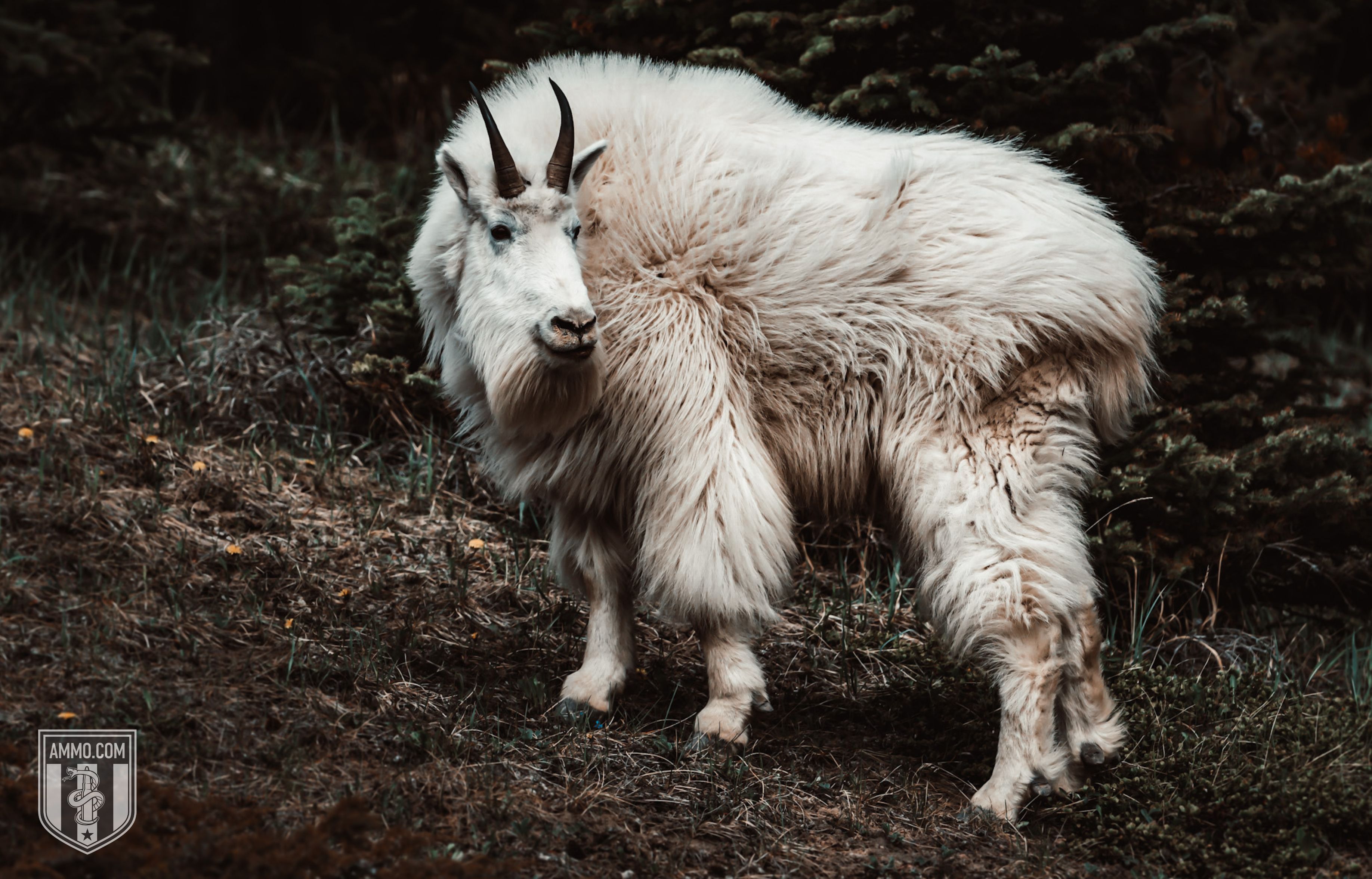
Mountain goats live in a challenging terrain, making them difficult to reach, so a flat-shooting cartridge is often used to hunt these animals. It doesn't have to be a magnum or giant caliber because mountain goats aren't big animals, and you'll need a lightweight rifle while hiking up the mountains. Some of the most popular calibers are:
• .270 Winchester Short Magnum (WSM)
• .22-250 Rem
• 6.5mm Creedmoor
• .260 Rem
• .308 Win
| .270 WSM | • The .270 WSM is a magnum cartridge designed for a lightweight rifle. It has a solid trajectory and is capable of taking goats out to 400 yards. |
| .22-250 Rem | • If you know you'll be able to get a little closer, the .22-250 Rem can take goats out to 200 yards while maintaining a flat trajectory. |
| 6.5 Creedmoor | • The 6.5 Creedmoor is a flat-shooting round that is more than capable of ethically harvesting mountain goats out to 500 yards. |
| .260 Rem | • Though the .260 Rem doesn't have the range of the 6.5 Creedmoor, it's still an excellent option for shots out to 400 yards. |
| .308 Win | • There's a reason hunters have loved the .308 Win for nearly 75 years: It's a capable, flat-shooting cartridge, and .308 hunting ammo is readily available. |
Hog Hunting Caliber
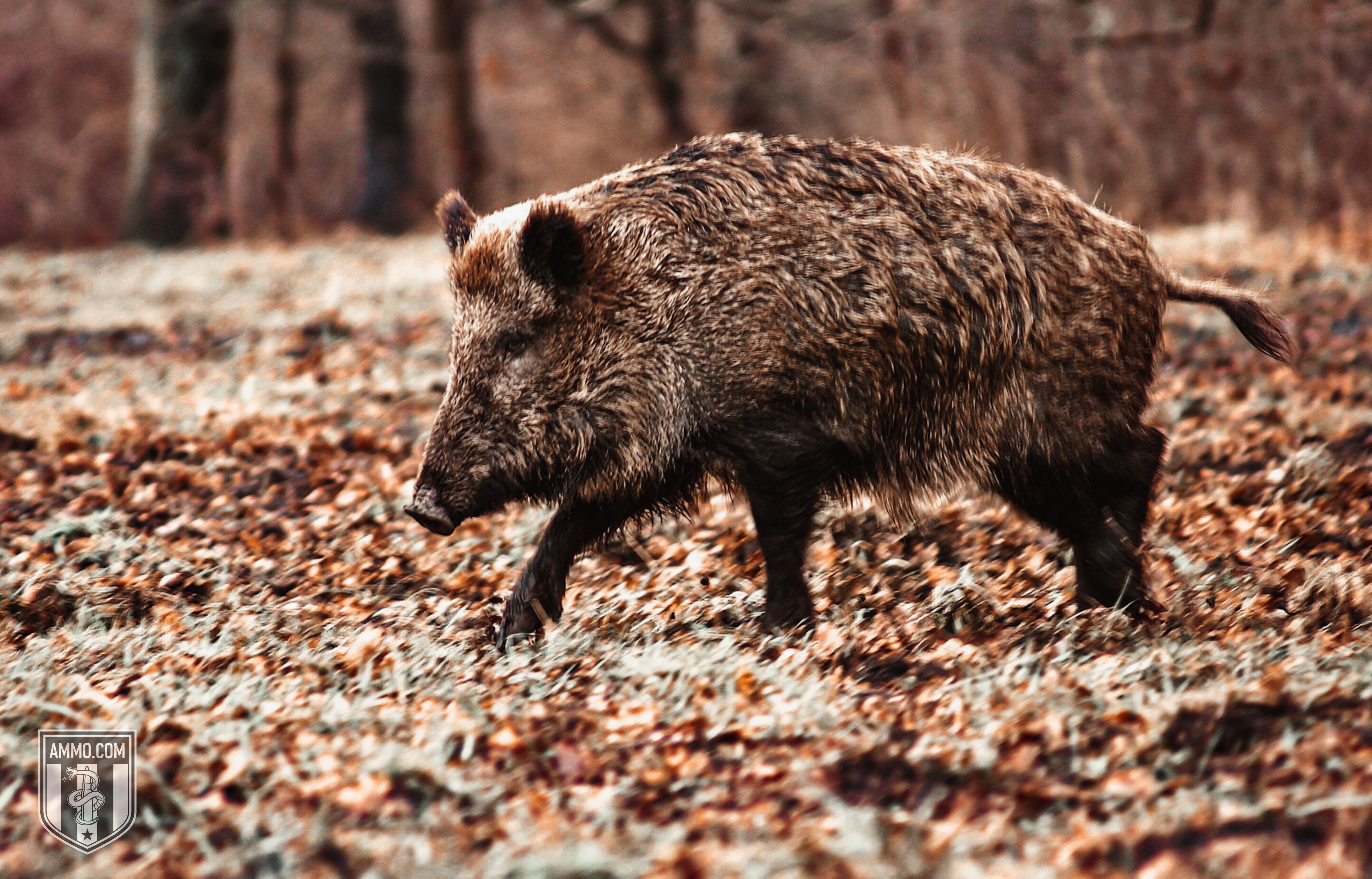
Wild hogs are tough animals and often live in rough environments. I've taken wild pigs with a .30-30 Winchester at close range, but other calibers are often more effective. Several of the standard hog hunting cartridges are:
• .357 Mag
• .45 ACP
• .44 Mag
• 12 Gauge
• .243 Win
• 6.5 Creedmoor
• .270 Win
• .30-30 Win
• 7mm-08 Rem
• .30-06 Springfield
• .308 Win
• 7mm Rem Mag
• 300 Win Mag
| .357 Mag | • Whether you have it chambered in a handgun or lever-action carbine, the .357 Magnum is great for defense against an angry boar at close range. |
| .45 ACP | • The .45 ACP is another round commonly carried by pig hunters as a last resort or defense. It's not their primary, but it gets the job done at close range. |
| .44 Mag | • If you want a bullet that'll stop a hog dead in its tracks at close range, the .44 Magnum is the one you want. |
| 12 Gauge | • Although uncommon, a 12 gauge with 000 buckshot can effectively drop a hog (or two) at close ranges (within 75 yards). |
| .243 Win | • I prefer something a little more substantial, but a .243 Win can kill a hog with a well-placed shot. The problem is getting that well-placed shot is rarely easy on these creatures. |
| 6.5 Creedmoor | • The 6.5 Creedmoor can ethically kill a hog at close or long range and is one of my top choices. |
| .270 Win | • Since hog hunting tends to happen in the thick brush, a .270 Win often shines because it's a hard-hitting cartridge at close range. |
| .30-30 Win | • The .30-30 Win is an iconic brush gun. If you're hunting in the marshy thickets hogs frequent, this could be your caliber of choice. |
| 7mm-08 Rem | • Though it might be slower than other cartridges, the 7mm-08 Rem is an excellent hog-hunting cartridge in heavily forested areas. |
| .30-06 Springfield | • Our last brush cartridge is the .30-06 Springfield. It handles the woods well and can be used to reach hogs farther away than the .30-30 can. |
| .308 Win | • If you're hunting a farmer's field, the .308 Win is likely what you'll need, as the flat-shooting, hard-hitting cartridge will drop a hog from several hundred yards away. |
| 7mm Rem Mag | • A 7mm Rem Mag is a solid option for hunting giant hogs. It packs a punch and handles the woods very well. |
| .300 Win Mag | • The .300 Win Mag will drop any hog on the planet from a considerable distance (but your shoulder will feel it the next day). |
Alligator Hunting Calibers
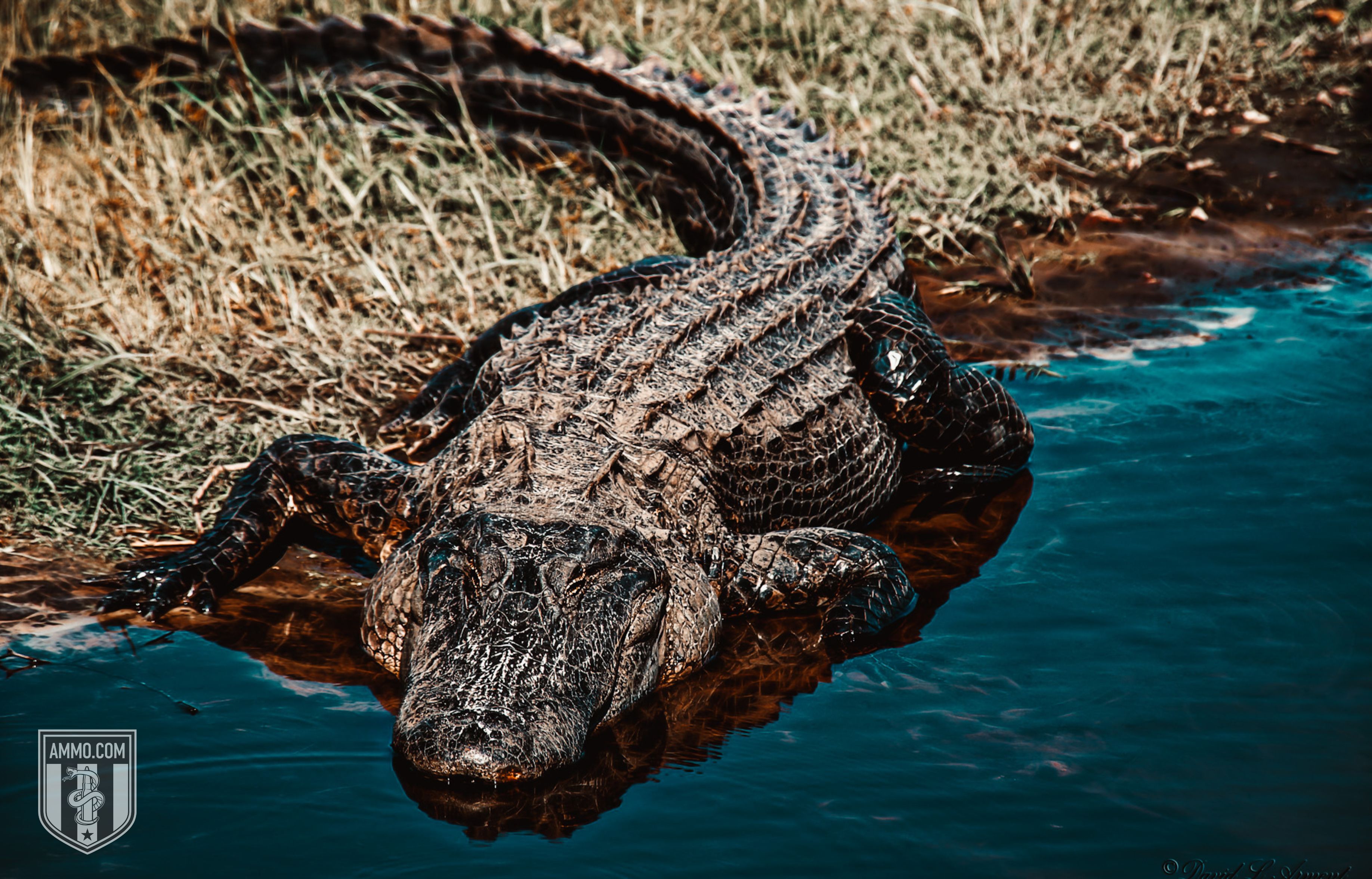
Alligator hunting is often close-range shots after you've trapped or hooked them on a line, so you don't necessarily need a big caliber. It's often best to use an easy-to-handle cartridge as you fight the gator with one hand and deliver the lethal blow with the other. Here are some of the top choices for gator hunting:
• .17 HMR
• .22 WMR
• 9mm
• .357 Mag
• .45 ACP
• .44 Mag
• .30-30 Win
• .243 Win
| .17 HMR | • One might assume the .17 HMR is underpowered for alligator hunting. Still, when you're inches or less from the gator's head, it has enough stopping power without being overpowered or leaving a giant hole. |
| .22 WMR | • Like the .17 HMR, the .22 WMR is powerful enough to dispatch any gator at a close distance, plus the low recoil makes one-handed shooting possible. |
| 9mm | • The 9mm is easily handled with one hand and can instantly dispatch a gator – but it leaves a much larger hole than the .17 HMR or .22 WMR. It's also a little more expensive to fire. |
| .357 Mag | • The .357 Mag can ethically kill a gator, but the hole will be significant. It's also more expensive than the 9mm, so don't miss. |
| .45 ACP | • The .45 ACP is another handgun caliber that can ethically kill an alligator, but it will leave a large hole in the skull, and it's more expensive than 9mm. |
| .44 Mag | • The .44 Mag is an extremely powerful handgun cartridge that will put down any gator at close range, but it's costly to shoot, even more so than some rifle cartridges. |
| .30-30 Win | • The .30-30 is a trusty gator cartridge because it's easy to fire and powerful enough to dispatch an alligator from 50 yards away. |
| .243 Win | • The .243 Win is perfect for gators because it has little recoil and can be used for longer shots. |
Continue reading more here: The Ultimate Hunting Caliber Chart: Quickly Pick The Best Cartridge For Each Species..


