|
Spark of Ingenuity
By:
Bobby Lee
In the late 1880's, Philadelphia patent attorney, Joshua Pusey found himself with an invitation to a dinner party for the Mayor of Philadelphia. Dressed in the proper attire, and heading out the door, Pusey drew his attention to a slight inconvenience. Within his pocket, there was a noticeably awkward bulge, clearly outlining the shape of a large box of wooden kitchen matches. Being infatuated with cigars, leaving the match box behind was not an option, and being notorious for tinkering with object designs, Joshua Pusey had an Idea. Already having a fixation with fire, Pusey was no stranger to the development of combustibles. In the 1880's he published a patent for torches made from paper laced with flammable chemicals, it appears the torches acted similarly to modern day "sparklers" to be used in social events. In the year 1889, Pusey began experimenting with possibilities that would eventually lead to the invention of what we today recognize as the matchbook. Working with his son by his side, the pair began mixing up an incendiary cocktail of chemicals, brewed over an old fashioned pot-bellied stove. The duo then adhered spear shaped, cut out, cardboard strips, to a sturdy paper base and immersed them into the mixture of match head chemicals. By 1892, Joshua Pusey had patented the "Flexible Match".  As innovative as the flexible match was, the invention was riddled with flaws and design issues. The most notorious of which, is that the striker for the matchbook was placed inside the book itself, which dramatically raised the probability of self-ignition. Joshua Pusey spent the next couple of years defending himself against a numerous variety of patent related law suites. In 1896, after four years of defending his patent in legal battles, Pusey ended up selling his idea to a company named Diamond, that later became Diamond Match Company, for $4,000, and a job opportunity. The matchbook finally began to make a break for popularity in the late 1890's when The Mendelssohn Opera Company purchased approximately 100 matchbooks from The Diamond Match company and placed an advertisement for an upcoming performance on the cover. The purchase catapulted matchbooks into the mainstream, and opened up an untapped niche in the developing world of American advertisement. 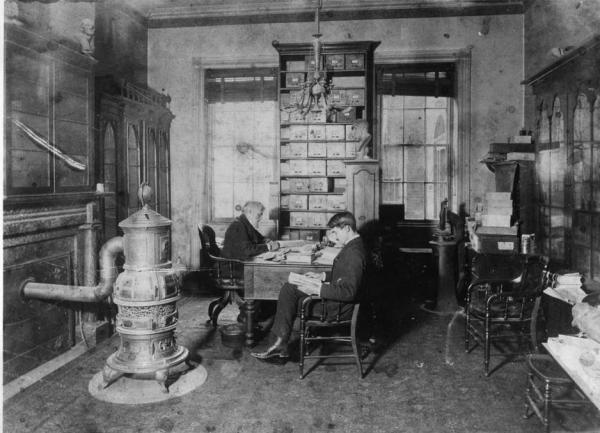
Joshua Pusey lived out the rest of his working life under The Diamond Match company, eventually passing away on May 8, 1906 at the age of 64. Throughout his life Pusey was credited with a total of 36 patents. Other inventions include a self-operating gate for horse drawn carriages, a hydrogen lamp, a ribbon-feed reverser for typewriters, and many others. Though many of his inventions seemed destined to be subtly appreciated, it is not the invention of the "Flexible Match" that makes Pusey a great inventor. It was his ingenuity and desire to reshape problems in a continually complicating world that made the inventions of Joshua Pusey influential and a great part of American history. Bobby Lee left the United States last year in an attempt to create a life that is more conducive to surviving the coming collapse. He regularly posts news links on Freedom’s Phoenix.
|