|
Prepping with an Urban Garden
By:
Gary Gagnon
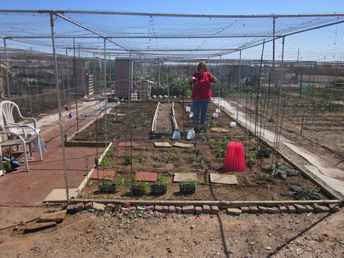
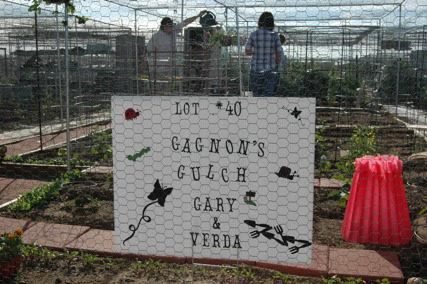
With our attention on inflation, the economic collapse and the rising costs of the dinner table, along with our daily listening to Declare Your Independence with Ernest Hancock that motivated us to join the Agriculture Club at our home in Sun City West. We purchased the improvements made on an existing plot for seven hundred and twenty five dollars.There are currently two hundred eighty four plots which makes it the largest community garden in Arizona and one of the largest in America. The plot measures sixteen feet by thirty two feet and is fully enclosed with an animal proof cage made of three quarter inch chicken wire with a steel frame. It has raised beds made of two by fourʼs. Some members have as many as four plots but we decided to only go with one plot while we gained experience. Even though the club has rototillers available we decided to purchase a light weight Mantis rototiller which weighs in at only thirty four pounds. It is much easier to handle in the raised beds. 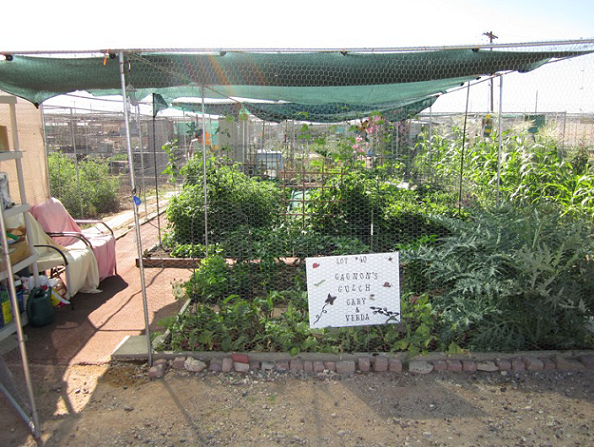
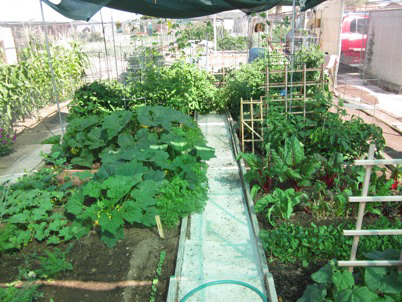
We had done some container gardening at our former home in California but it has been a wholly different proposition leaning the tricks of raising a successful garden under the extreme conditions of the Valley of the Sun. Fortunately our friendly neighbors at the Agriculture Club have been most helpful. The first thing they gave us was a list of planting dates and which plants do best in the Spring or Fall seasons. We learne the value of the judicious use of shade cloth as the temperatures soar. Extreme Gardening by Dave Owens, which helped us understand how to grow organic in the hostile desert climate and All New Square Foot Gardening by Mel Bartholomew are two of our heavily relied on resources. We heartily recommend both of these books and find them to be indispensable in the low desert conditions we have here.
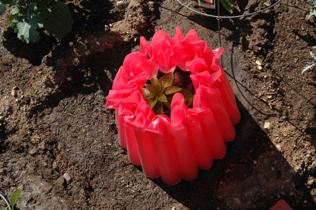
Wall Oʼ Water
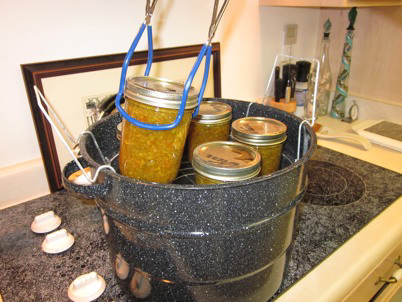
The cells around the outside of this plastic sleeve are filled with water, which will absorb the suns heat and keep the plants warm. This cozy little igloo helped the pepper plant within survive the cold snap that hit our area this last spring. Wall Oʼ Waters can give, as much as, 2 to 3 weeks jump on getting plants into the garden and extend the growing season. Growing organic and avoiding the use of pesticides is an important issue for us. In the early Spring, Wall Oʼ Waters help protect the tomatoes and peppers from frost. Marigolds were planted and fly traps were hung to control insects. Flowering plants helped to attract bees which are essential to ensure pollination and improved yields. We fertilized with steer manure, blood meal, bone meal, sea weed emulsion and fish emulsion.The importance of building a good soil base can not be over emphasized along with a proper watering plan. Deep soaking to get the roots to grow deeply seemed to work best. Several different soap solutions were used, as recommended in Extreme Gardening, to keep the bugs off the leaves. All of these methods were met with reasonable success. I would estimate we were able to keep our losses down to 20% of the crop being consumed by the bugs without the increased dangers of pesticide use. Our own improvements were added to the plot by installing a sink with a spray nozzle and an inline water filter. The vegetables harvested could be washed and the filtered water drained back into the garden beds. Every little bit of water conservation helps. Paving stones and carpeting were added in the walkways, to keep from tracking dirt and from sinking into the soft rototilled earth, while working the garden. Cages and trellises were added for the tomatoes, beans and cucumbers. We tried growing the potatoes in a bag to increase the yield. Along with strawberries in hanging baskets to utilize the overhead growing area. Going vertical is always a good idea. Not only does it give more square footage it keeps the fruit off the ground. An added bonus is cucumbers and melons are much less likely to spoil when not allowed to rest on the damp soil. The muskmelons that were planted have attached themselves to the chicken wire and grown up the side of the cage and onto the roof. It is amazing how large the fruit can get and still be supported by the vine. Not willing to take a risk, slings were fashioned from shade cloth and attached to the chicken wire with zip ties. It is quite a sight. 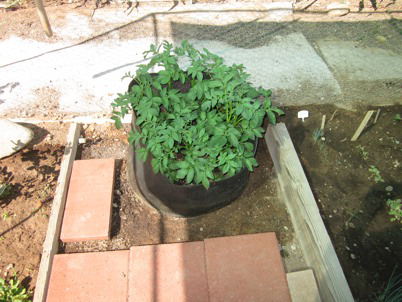 This jumbo potato bag has approximately 8 potato plants. At this point it is still folded over but as the plants grow the bag is expanded and more dirt is added. No harvest yet! This jumbo potato bag has approximately 8 potato plants. At this point it is still folded over but as the plants grow the bag is expanded and more dirt is added. No harvest yet! 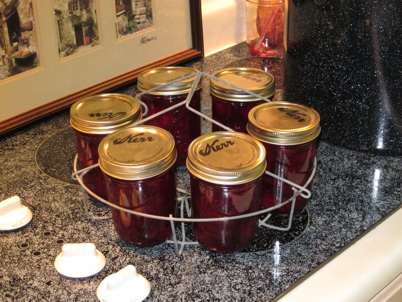 Pickled beets are ready to be placed in the water bath canner as soon as the water comes to a rolling boil.
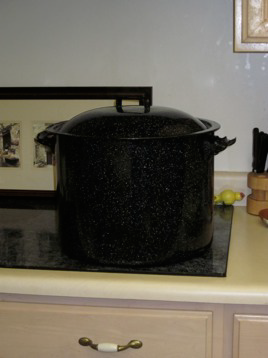 The speckled blue enamel water bath canner is still a great investment. They can be purchased new, for as little as $18 but can be found at estate or garage sales for even less. The speckled blue enamel water bath canner is still a great investment. They can be purchased new, for as little as $18 but can be found at estate or garage sales for even less. The time to be spent in the garden was grossly underestimated because of the pleasure we gained working the crops and watching them grow. Verda and I spend 1 1/2 to 2 hours every other day watering and weeding not to mention harvesting. Many different plant varieties were planted to determine which produced and tasted best. The next garden will feature those varieties and will be planted in greater quantity to produce yields sufficient to allow more freezing, canning and dehydrating for the pantry. Next season there will be a map of the garden detailing the layout of the items planted, the date planted and the normal maturity date of each plant. This should help in knowing exactly when to harvest. 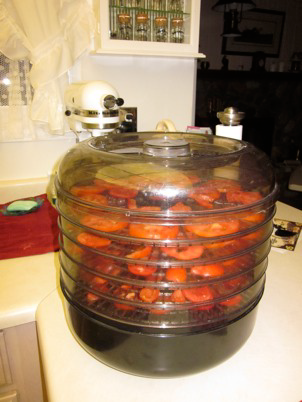 There are numerous dehydrators on the market. The newer ones have circulating fans and will dry quicker and more even. This one is 20 years old, has no fan, and works just fine. Our back up is a sun dehydrator with mesh screening that can be hung outside on the patio and is also very effective. After these tomatoes aredried they will be vacuum sealed in a canning jar. This is one batch which is an assortment of different sizes and types of tomatoes. Approximately 20 tomatoes per batch. There are numerous dehydrators on the market. The newer ones have circulating fans and will dry quicker and more even. This one is 20 years old, has no fan, and works just fine. Our back up is a sun dehydrator with mesh screening that can be hung outside on the patio and is also very effective. After these tomatoes aredried they will be vacuum sealed in a canning jar. This is one batch which is an assortment of different sizes and types of tomatoes. Approximately 20 tomatoes per batch. 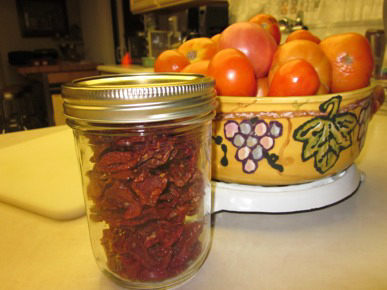 This jar is approximately 2 batches of dehydrated tomatoes. It certainly saves space in the pantry! This jar is approximately 2 batches of dehydrated tomatoes. It certainly saves space in the pantry! 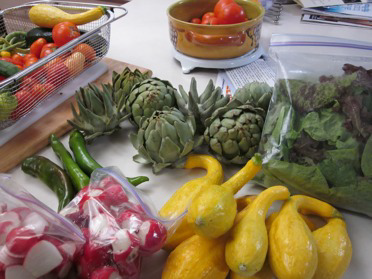 Typical every other day harvest from the test garden. Canning Jars of Sweet Pickle Relish, have been processed, and are ready to be removed from the water bath canner. 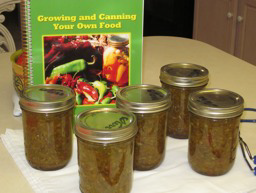 Canned goods must cool for 12 to 24 hours without being moved to insure a proper seal.
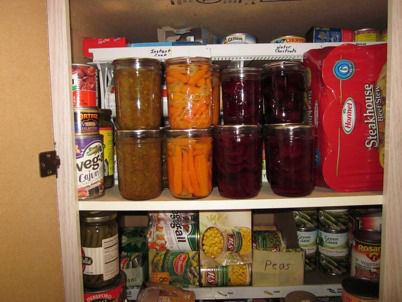
Tomatoes were dehydrated and vacuum sealed in canning jars. Pickled beets, sweet pickle relish, pickled carrots and refrigerator sweet pickles were all preserved out of this years test garden. We were able to try these techniques successfully and will be ready to go with the larger yields of the next garden. Important note: Do not try to can tomatoes if they are overripe as they will not can properly due to low acidity. This is where a dehydrator comes in handy.
A well stocked pantry from your garden helps cut grocery costs.
Here is a list of what we were able to plant in our plot. Artichokes, Bush Beans, Kentucky Wonder Pole Beans, Scarlet Emperor Pole Beans, Bush Wax Beans, Detroit Red Beets, Broccoli Rabe, Nantes Coreless and Baby Little Finger Carrots, Cauliflower, Straight Eight and Pickling Cucumbers, 5 varieties of Green, Red and Yellow Bell Peppers, Hungarian Yellow Peppers, Anaheim Chiles, Jalapeno Chiles, Mesclun Sweet Salad Mix, Heirloom Red Spotted Romaine Lettuce, Red leaf Lettuce, Bright Lights Swiss Chard, Red Winter Kale, Crooked Neck Yellow Squash, Zucchini Squash, Olympia and Teton Spinach, Fourteen Varieties of Tomatoes, Tomatillos, Diakons, Crimson Crisp and Red Head Radishes, Muskmelon, Bunching Onions, Chives, Cilantro, Sweet Potatoes, Yukon Gold Potatoes, Oregon Sugar Pod II Snow Peas, Blackberries, Blueberries, Raspberries and Strawberries. 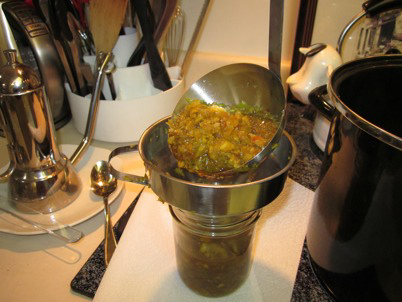 Sweet pickle relish was a great way to use up an assortment of Straight Eight and pickling cucumbers. Along with bell peppers and onions from the garden. Sweet pickle relish was a great way to use up an assortment of Straight Eight and pickling cucumbers. Along with bell peppers and onions from the garden. I would estimate the yield on the Spring crop to be 200 to 300 pounds of fresh produce, not bad for a first effort. The sweet potatoes, African Climbing Spinach, and the Muskmelons will continue to grow throughout the summer. The other plants are being pulled and amendments added to the soil to prepare for the Fall planting. Keep building and improving the soil and it will continue to yield results. Artichokes,Raspberries, Blackberries and Blueberries, which are perennial plants, will be left in place. A light fertilization during extreme heat will help the plants withstand the high temperatures. Three of our favorite, go to cookbooks and canning guides are: Ball Blue Book Guide to Preserving, Backwoods Home Cooking, an Anthology from the Backwoods Magazine and Growing and Canning Your Own Food by Jackie Clay. Jackie Clay is an amazing woman and is a true homesteader. Her advice is genuine and her recipes are wonderful. In addition to her many books, Jackie writes for Backwoods Home Magazine. Home canned goods have a shelf life of several years and the process can prevent losing the items in the refrigerator and freezer, in the event, of a power outage. That is why it is important to learn and practice these skills now and not wait for a problem to occur. Once items are processed and canned they require no refrigeration. As you start your own garden, watch it grow to harvest, then can and preserve the fruits of your labor, you will experience a satisfaction and pride unknown to those who just march down to the local store to purchase items they neither know where they come from or what sorts of chemicals are in them.
|