



IPFS News Link • European Union
Cameron Rejects Do-Over Brexit Vote as Market Fallout Worsens
• http://www.bloomberg.comPrime Minister David Cameron rejected calls for a do-over vote on leaving the European Union and set up a team of officials to prepare for withdrawal following the referendum last week that stunned the world and triggered financial-market turmoil.
The pound extended its drop to touch the lowest against the dollar since 1985 and international policy makers scrambled to respond after a weekend in which Cameron's administration appeared rudderless and Scotland's government floated a referendum on its own independence.
Members of the splintered government sought to reassure investors they'll be able to navigate the fallout. Chancellor of the Exchequer George Osborne broke his silence to declare "you should not underestimate our resolve" to limit an "inevitable adjustment" in the economy. Boris Johnson, the pro-Brexit favorite to succeed Cameron, said "the negative consequences are being wildly overdone, and the upside is being ignored."
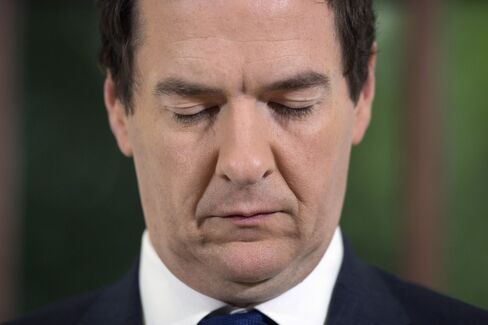
George Osborne, U.K.'s chancellor of the exchequer, reacts during a news conference on Monday, June 27, 2016
Photographer: Simon Dawson/Bloomberg
The rhetoric brought policy makers no closer to clarifying just what the U.K's new relationship with the EU will look like and how badly the economy will suffer from the rupture. With Britain facing its greatest crisis in at least half a century, German Chancellor Angela Merkel and fellow European leaders today kick off a series of crisis talks.
A new Cabinet Office unit, comprising officials from the Treasury and Foreign Office will start doing the groundwork for leaving the EU, which Britain joined in 1973. Helen Bower, Cameron's spokeswoman, told reporters in London after the cabinet meeting that a second referendum was "not remotely on the cards" following a public petition for one.
The BBC reported that the House of Commons is investigating allegations of fraud in connection with the petition, which had more than 2.5 million signatures.
What Next?
Europe's leaders must decide how to treat Britain in the divorce talks and what steps to take to reinforce confidence in a bloc set to shrink with the departure of its second-biggest economy. Failure to deliver a strategy could prompt markets to force their hand -- as they did after the collapse of Lehman Brothers Holdings Inc. and Greece's debacle. Merkel said today there would be no informal talks with the U.K. before it filed to exit.
U.S. Secretary of State John Kerry arrived in Brussels today and was due to head to Londonto assess the situation first hand. "There are ways to smartly move ahead in order to protect the values and interests that we share in common," Kerry said in Rome on Sunday.


