


IPFS News Link • Philosophy: Libertarianism
But What About the Roads?
• Eric Peters AutosAnyone who has tried to advocate for a libertarian society – i.e., a society in which coercion is the fundamental crime – has heard this refrain. Its premise is that we'd have no roads to travel on if it weren't for government seizing people's land – this is styled "eminent domain," to make it sound official rather than immoral – and forcing people to pay for the roads laid down upon them.
It's a strange argument given that – in the first place – roads precede government. They may have been (at first) mere paths or trails through woods and fields – but the function is fundamentally the same as any other road.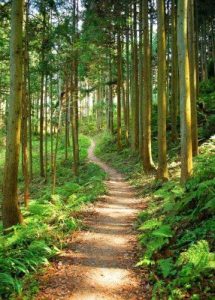
Some of these trails and paths eventually became very much like the roads as we know them, sans the asphalt and guardrails, of course. These roads were considered the public right-of-way for much of history – and it was accepted that everyone had the right to travel upon them.
So, roads – and the principle of the public right-of-way – predate government.
It is government which has abused the public right-of-way, by claiming ownership of them and by turning the use of them into a conditional privilege which may be (and often is) rescinded at the government's pleasure.
People are compelled to apply for a license to use what were the public right-of-ways and may only use them in government-approved vehicles, the ownership of which has also been turned into a kind of conditional rentership, in that the "owner" is compelled to make regular – and endless – payments for such things as "registration" in order not only to be allowed to use the vehicle on what once were the public right-of ways but also to retain possession of the vehicle, itself. 
If government got out of the road business there would certainly still be roads – because there always have been roads. And people would be free to use them – and to pay for them – according to whether they needed to or wanted to use them.
Is government necessary for commerce to exist?
Watch Streaming Broadcast Live:

LRN.fm

DLive

Telegram


