


04-04-12 -- Anton Howes - (MP3 & Videos Loaded)
Hour 1 - 3


Please go to the meetup to R.S.V.P.
Arizona's Top News
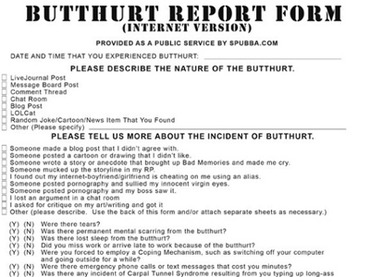
Anonymous fights Arizona censorship bill with 'butthurt form'
04-04-2012 • http://rt.com
There’s a fine line between offensive and hilarious, and Arizona lawmakers aim to make that boundary legally protected.
04-04-12 Hour 1 Ernest Hancock discusses
04-04-12 Hour 3 Ernest Hancock discusses carnivore,
Carnivore was a system implemented by the Federal Bureau of Investigation that was designed to monitor email and electronic communications. It used a customizable packet sniffer that can monitor all of a target user's Internet traffic. Carnivore was implemented in October 1997. By 2005 it had been replaced with improved commercial software such as NarusInsight.[1]
|
Contents [hide] 1 Configuration2 Placement3 Controversy4 See also5 References |
The Carnivore system was a Microsoft Windows-based workstation with packet-sniffing software and a removable disk drive.[2] This computer must be physically installed at an Internet service provider (ISP) or other location where it can "sniff" traffic on a LAN segment to look for email messages in transit. The technology itself was not highly advanced — it used a standard packet sniffer and straightforward filtering. The critical components of the operation were the filtering criteria. To accurately match the appropriate subject, an elaborate content model was developed.[3]
[edit] PlacementThe Carnivore system could be installed on a system either through the cooperation of the system owner, or by use of a court order. Once in place, the system was restricted by U.S. Federal law[citation needed] to only monitor specific persons. Under the current regulations, publicly acknowledged government personnel are required to get a warrant or court order naming specific people or email addresses that may be monitored.[citation needed] When an email passes through that matches the filtering criteria mandated by the warrant, the message is logged along with information on the date, time, origin and destination. This logging was believed to be relayed in real time to the FBI. All other traffic would presumably be dropped without logging or capture.[citation needed]...
[edit] ControversySeveral groups expressed concern regarding the implementation, usage, and possible abuses of Carnivore. In July 2000, the Electronic Frontier Foundation submitted a statement to the Subcommittee on the Constitution of the Committee on the Judiciary United States House of Representatives detailing the dangers of such a system.[4] The Electronic Privacy Information Center also made several releases dealing with it[5]
The FBI countered these concerns with statements highlighting the target-able nature of Carnivore. Assistant FBI Director Donald Kerr was quoted as saying:
The Carnivore device works much like commercial "sniffers" and other network diagnostic tools used by ISPs every day, except that it provides the FBI with a unique ability to distinguish between communications which may be lawfully intercepted and those which may not. For example, if a court order provides for the lawful interception of one type of communication (e.g., e-mail), but excludes all other communications (e.g., online shopping) the Carnivore tool can be configured to intercept only those e-mails being transmitted either to or from the named subject. ... [it] is a very specialized network analyzer or "sniffer" which runs as an application program on a normal personal computer under the Microsoft Windows operating system. It works by "sniffing" the proper portions of network packets and copying and storing only those packets which match a finely defined filter set programmed in conformity with the court order. This filter set can be extremely complex, and this provides the FBI with an ability to collect transmissions which comply with pen register court orders, trap & trace court orders, Title III interception orders, etc.... ...It is important to distinguish now what is meant by "sniffing." The problem of discriminating between users' messages on the Internet is a complex one. However, this is exactly what Carnivore does. It does NOT search through the contents of every message and collect those that contain certain key words like "bomb" or "drugs." It selects messages based on criteria expressly set out in the court order, for example, messages transmitted to or from a particular account or to or from a particular user.[6]
After prolonged negative coverage in the press, the FBI changed the name of its system from "Carnivore" to the more benign-sounding "DCS1000." DCS is reported to stand for "Digital Collection System"; the system has the same functions as before. The Associated Press reported in mid-January 2005 that the FBI essentially abandoned the use of Carnivore in 2001, in favor of commercially available software, such as NarusInsight (a mass surveillance system).[7]
[edit] See also Communications Assistance For Law Enforcement ActTotal Information AwarenessSurveillanceCOINTELPROEchelon NSA worldwide digital interception program Room 641A NSA interception program (started circa 2003, but first reported in 2006) Policeware[edit] ReferencesWatch Streaming Broadcast Live:

LRN.fm

DLive

Telegram